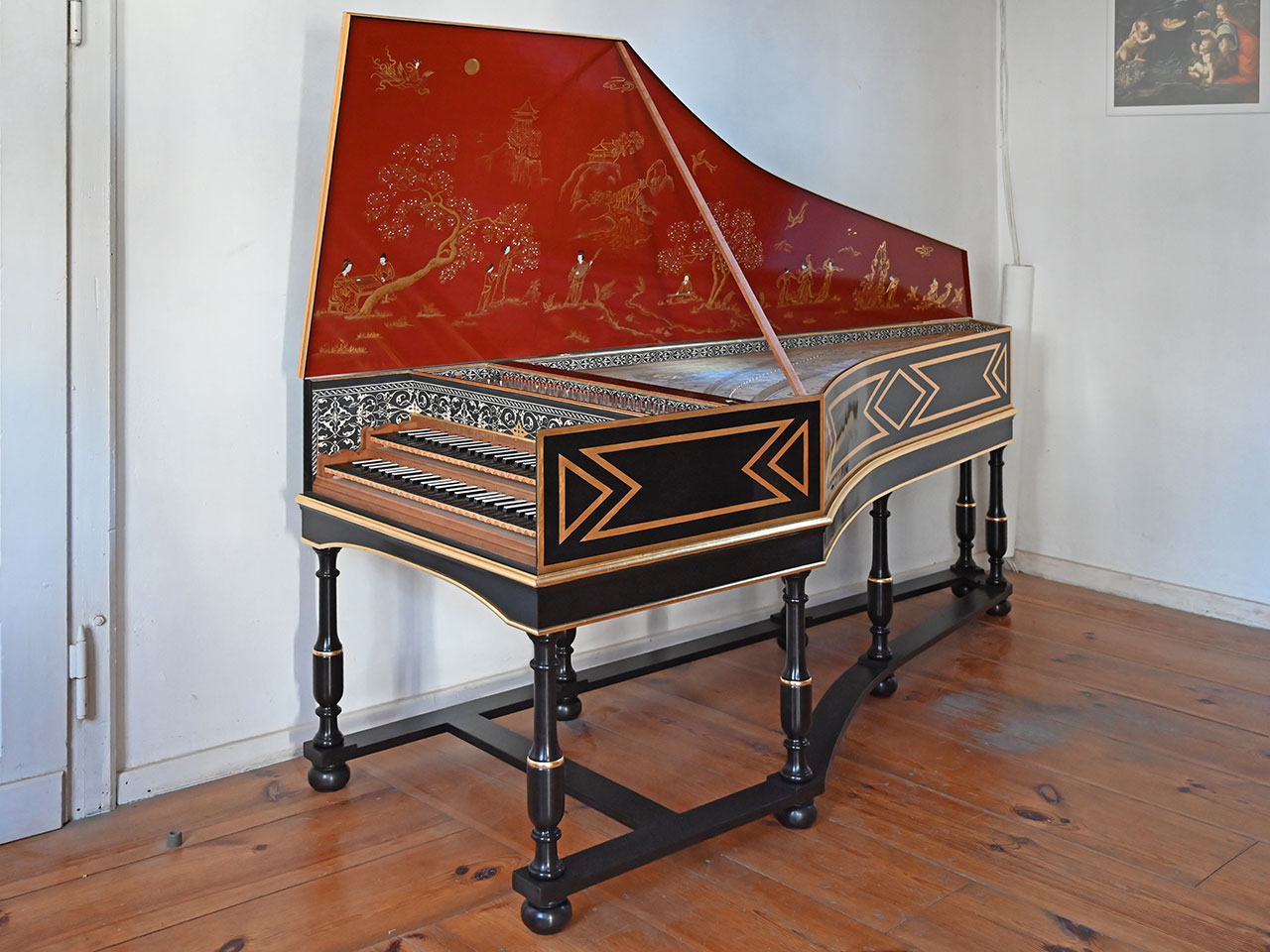
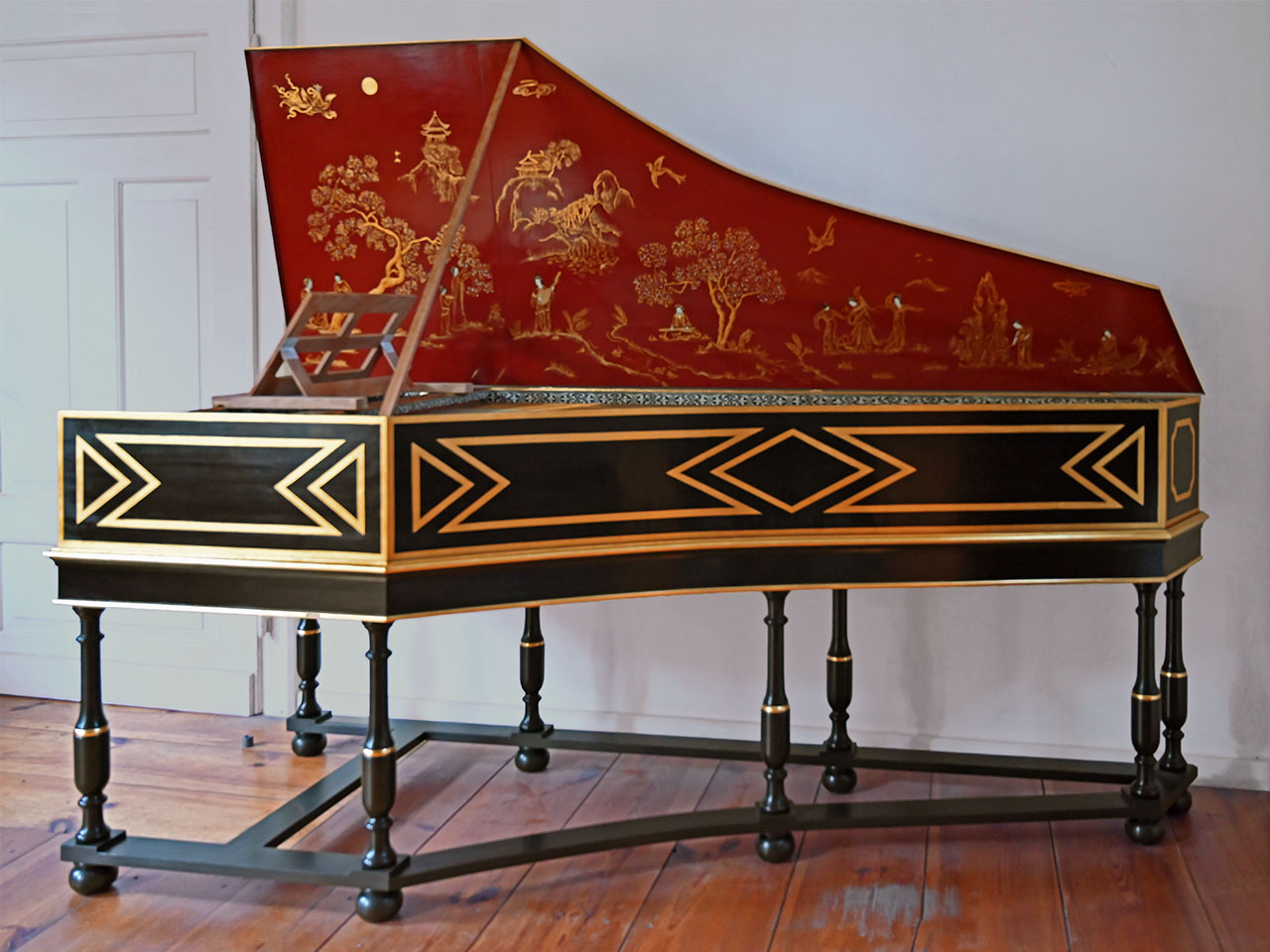
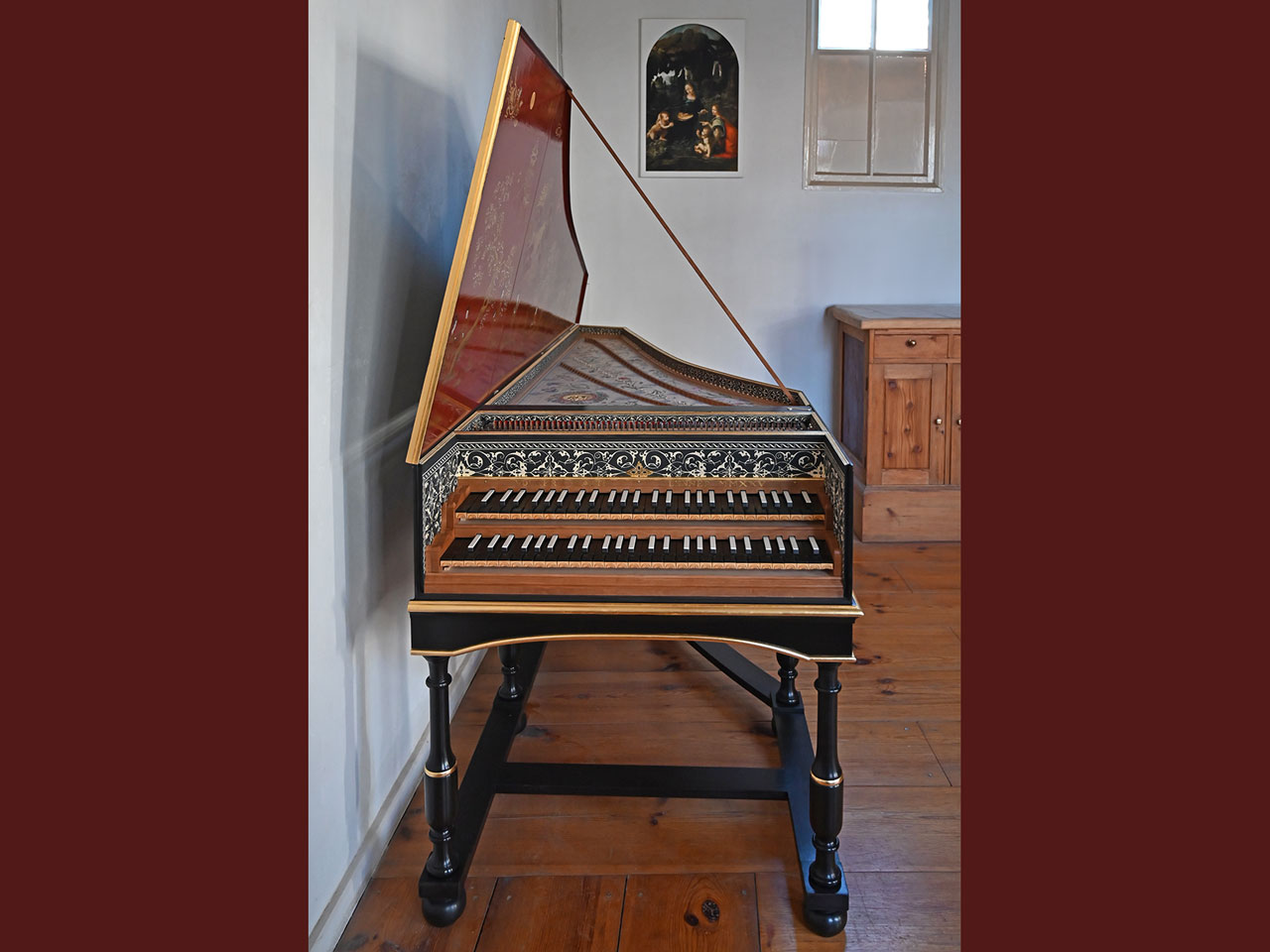
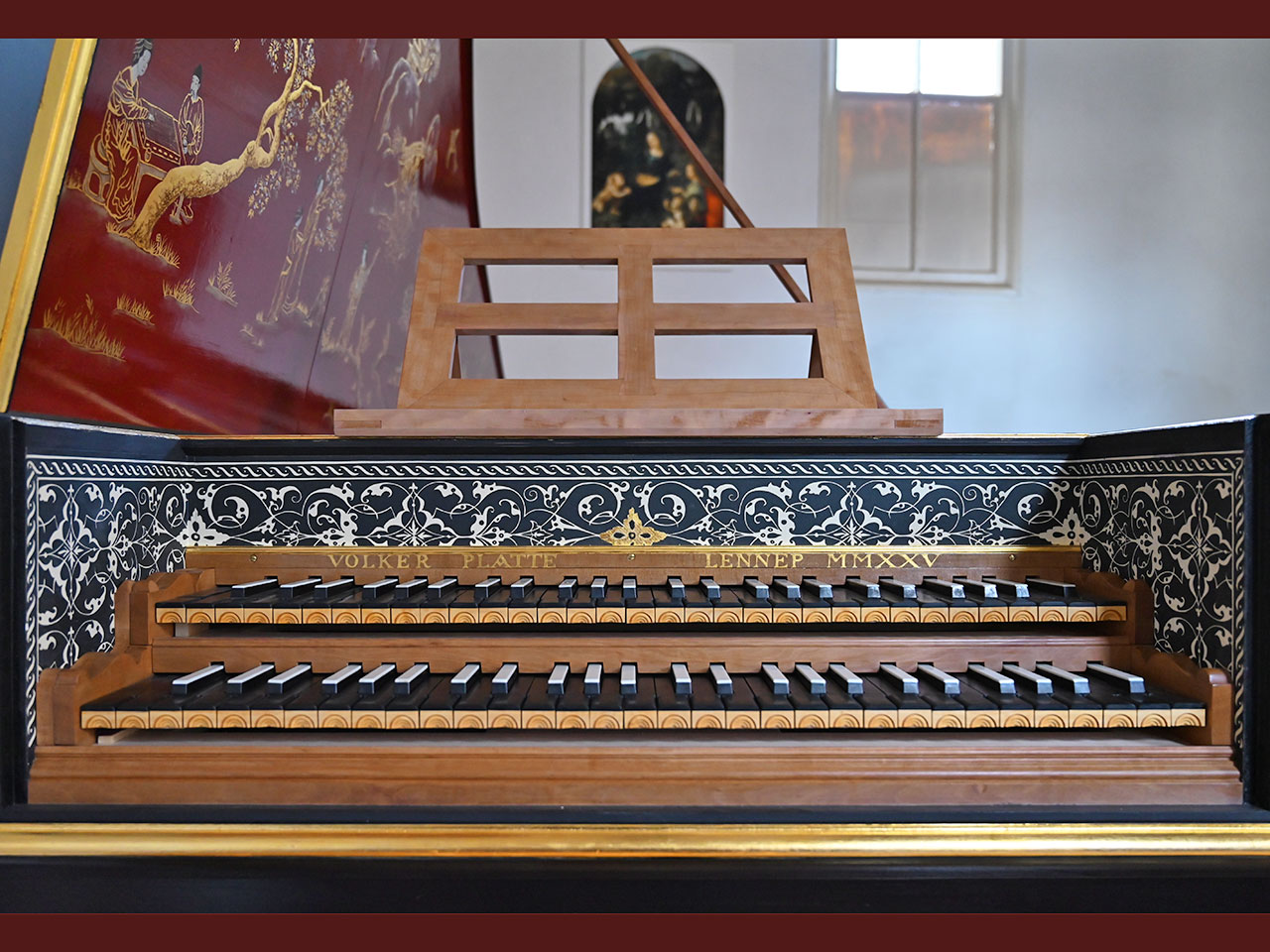
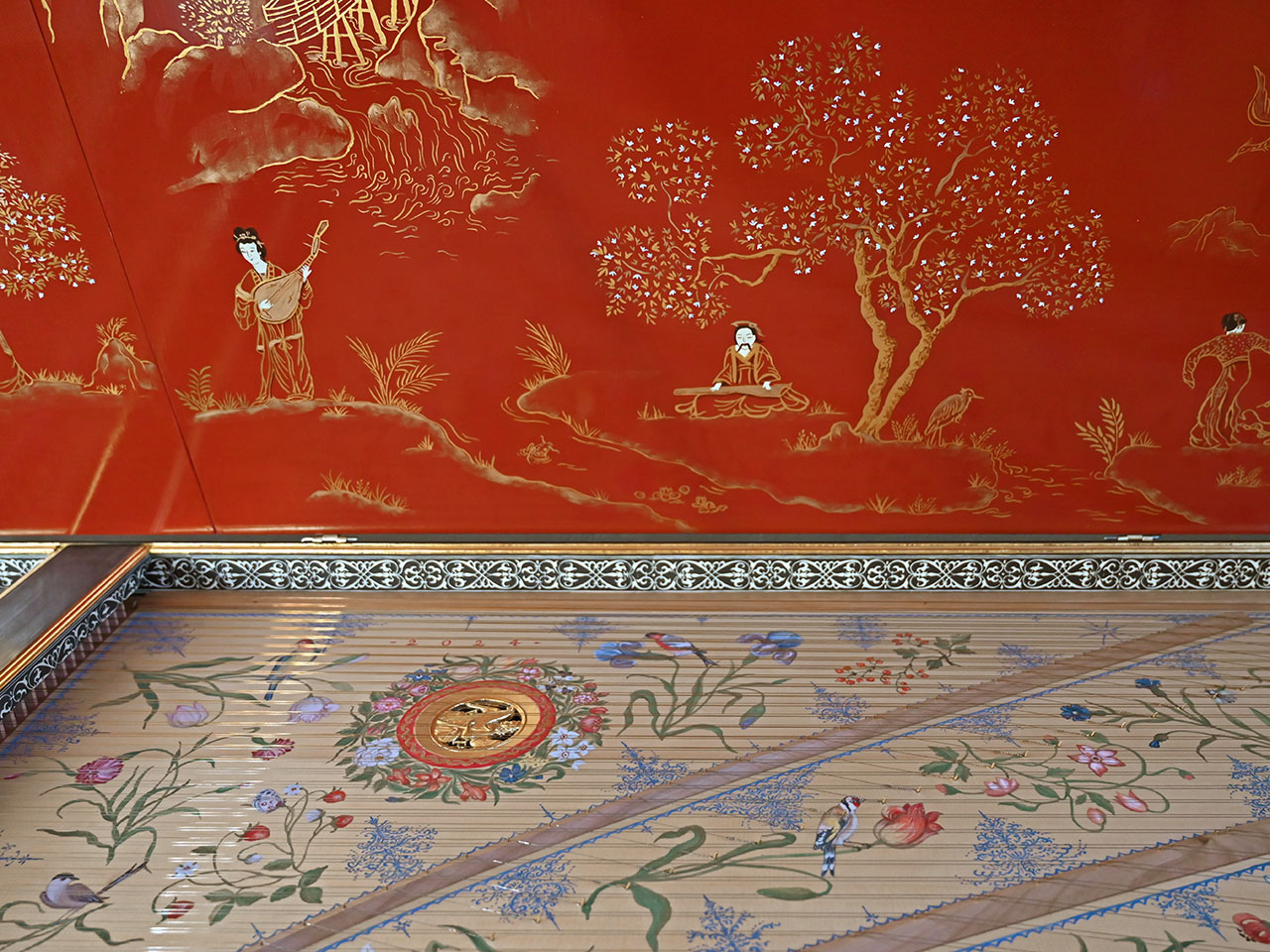
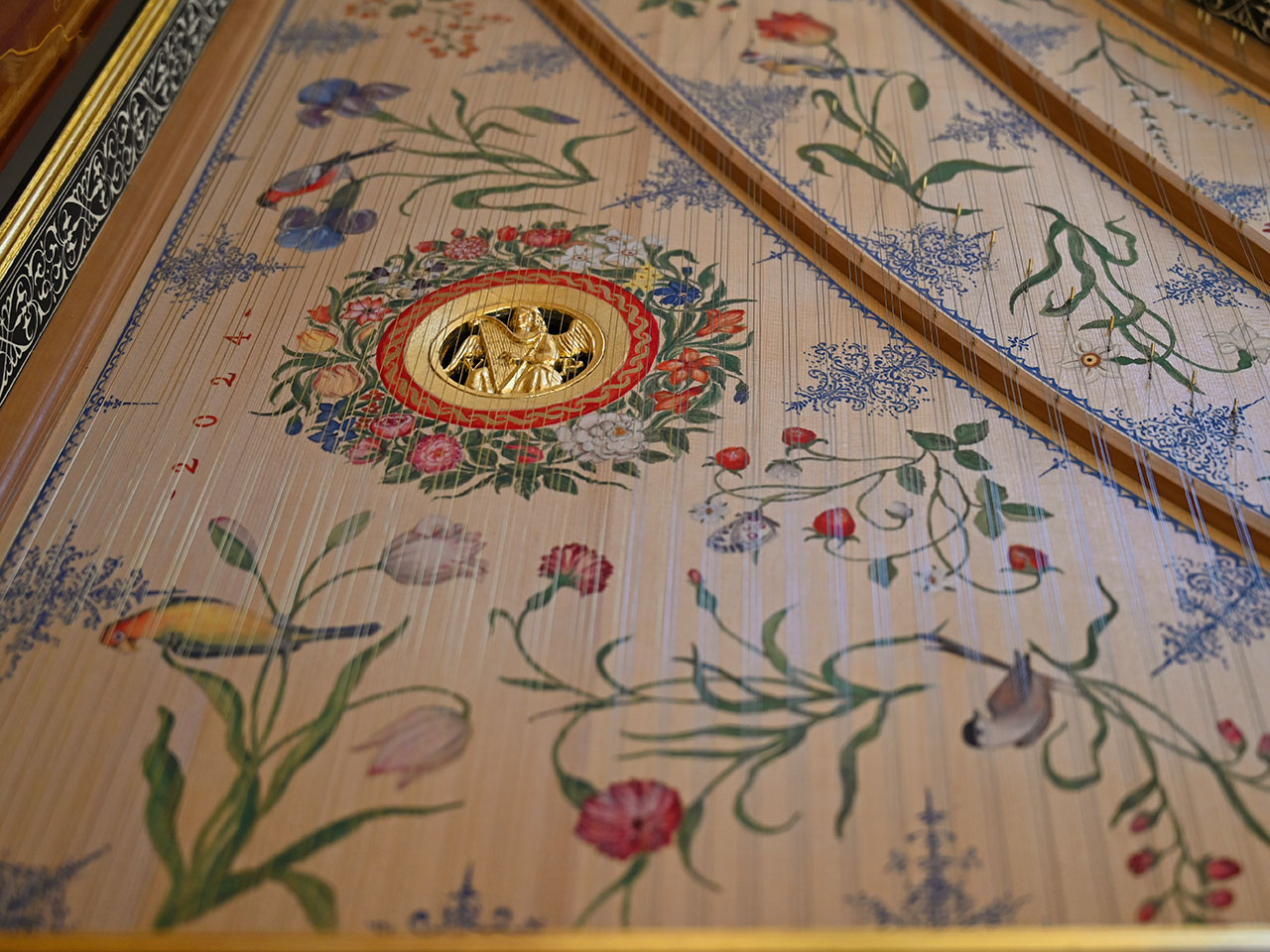
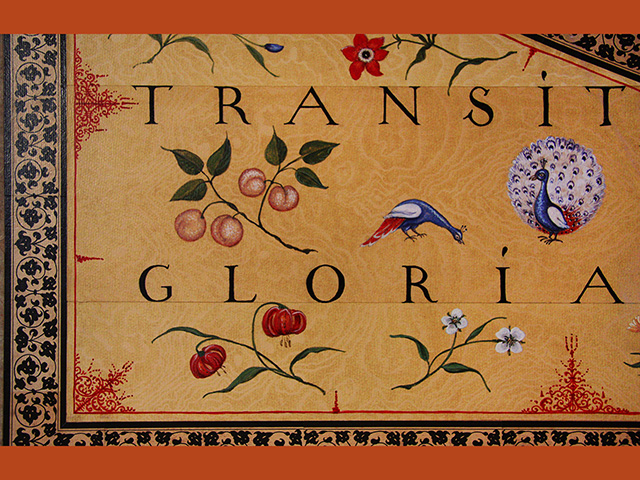
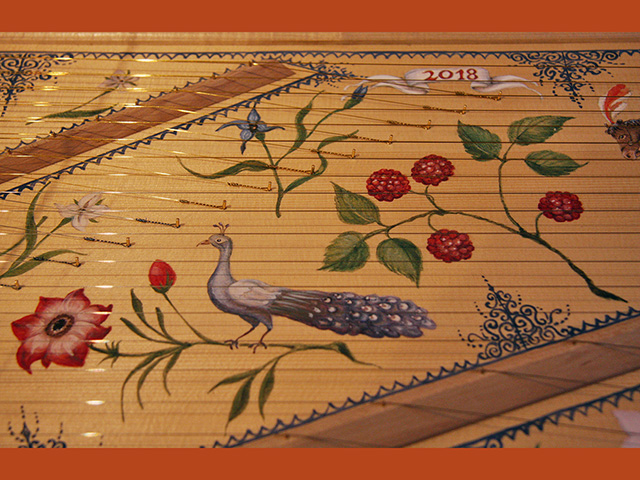
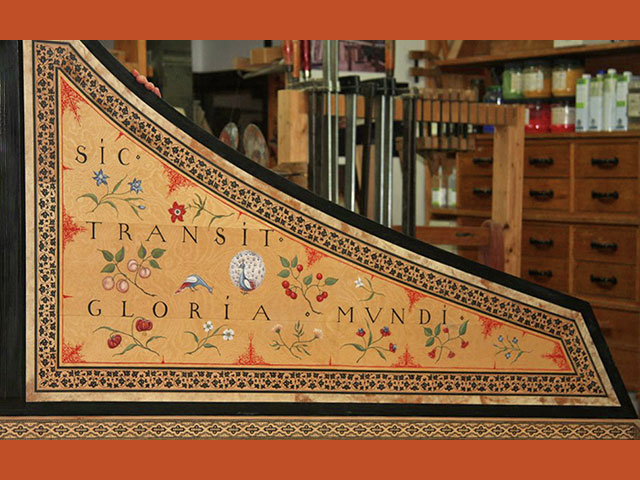
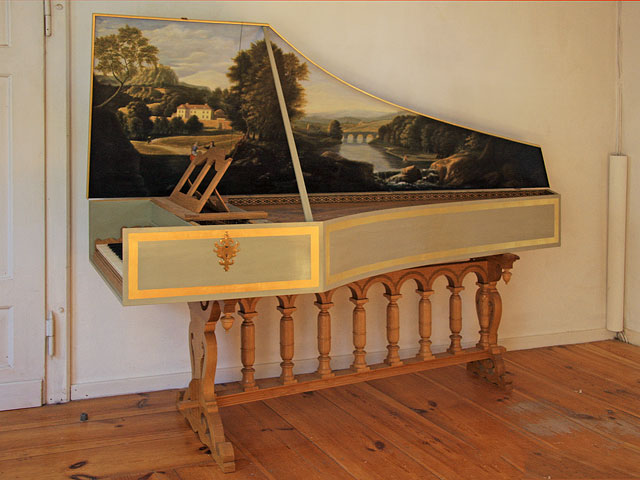
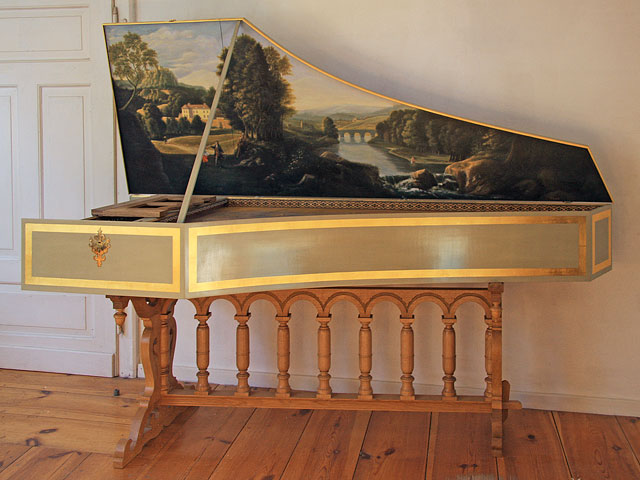
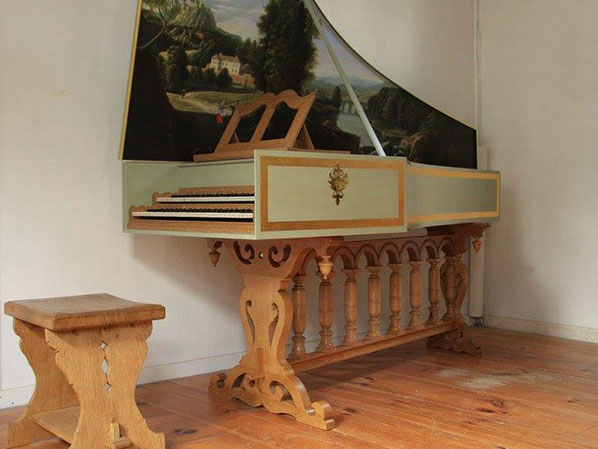
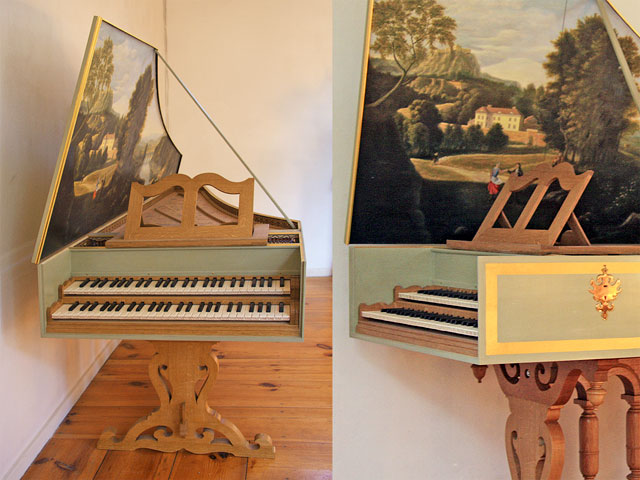
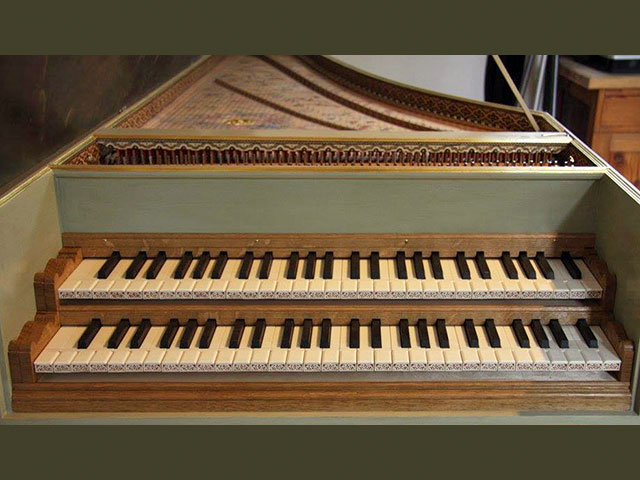
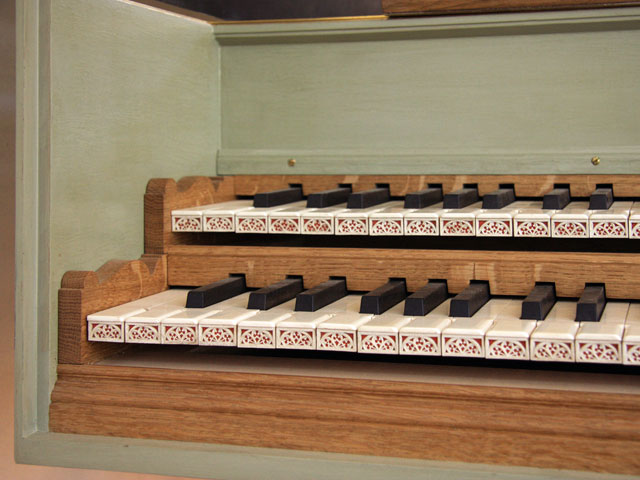
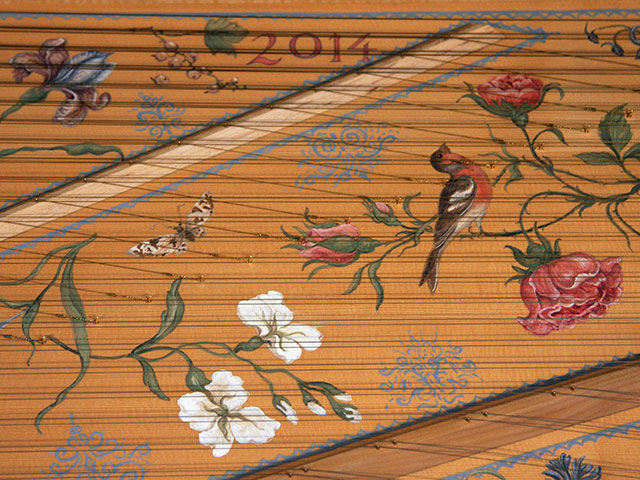
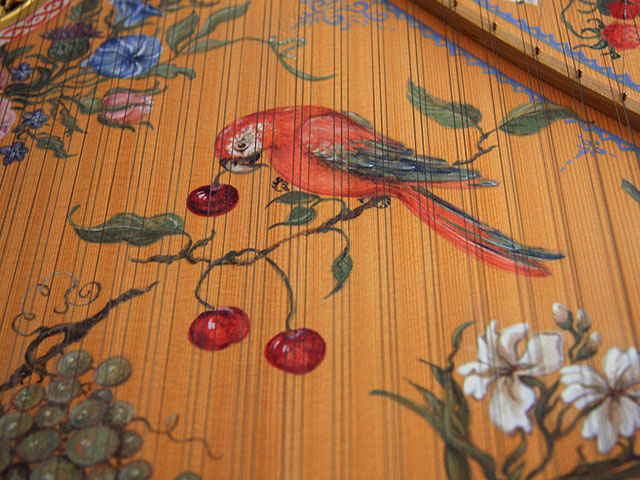
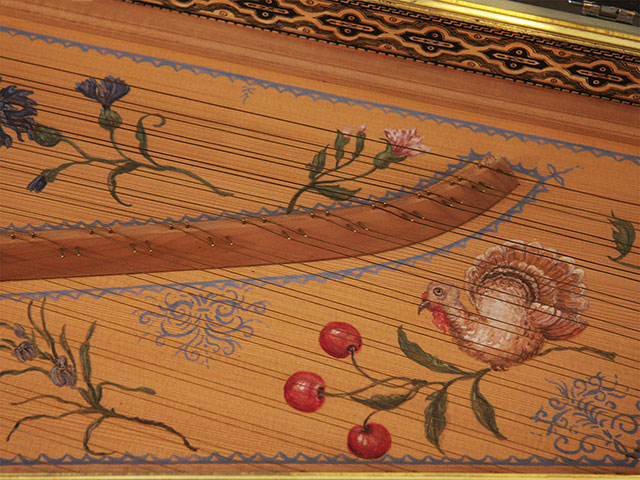
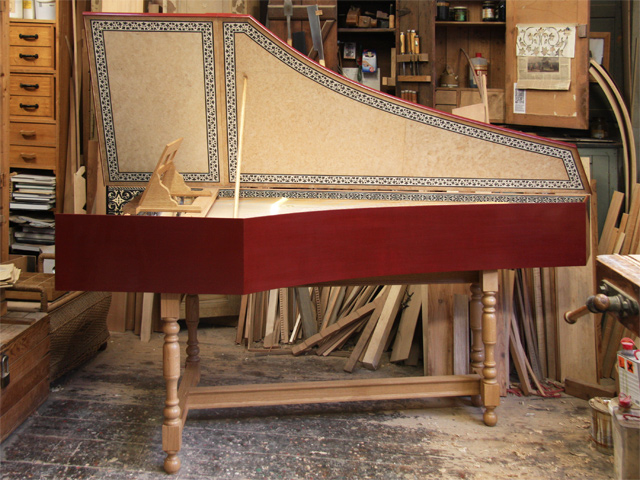
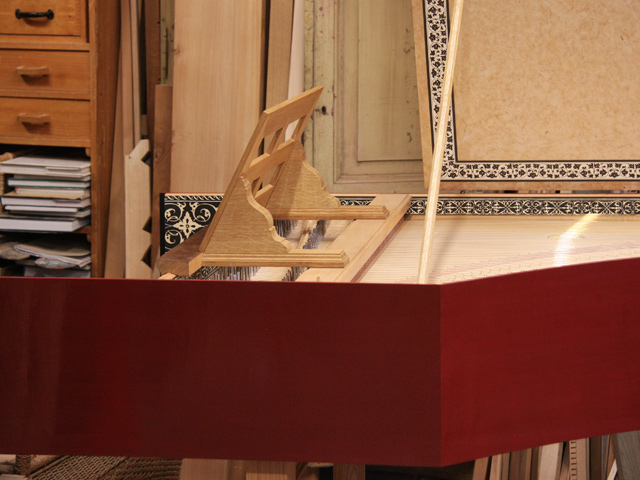
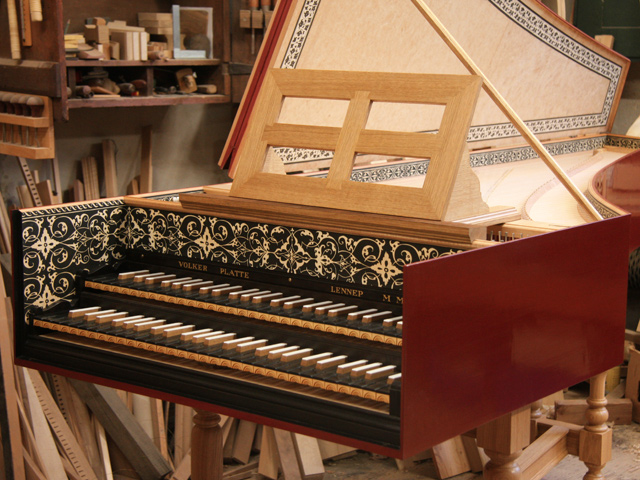
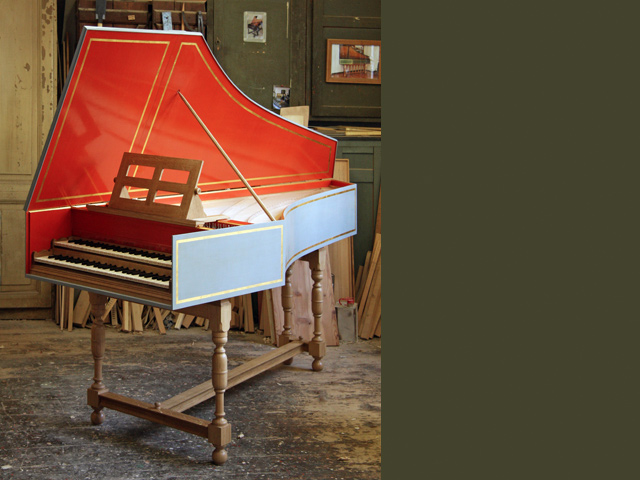
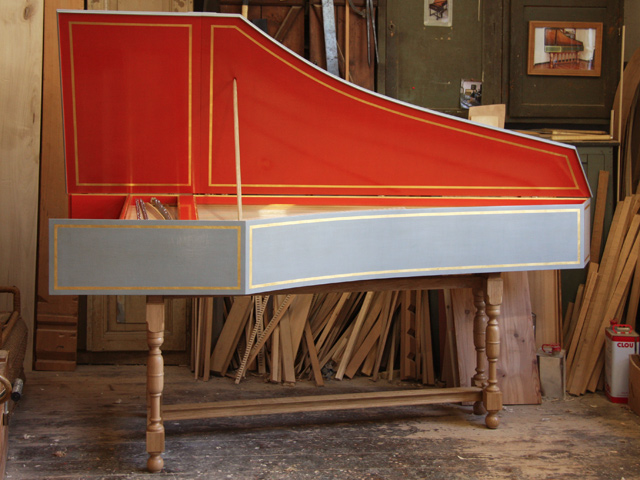
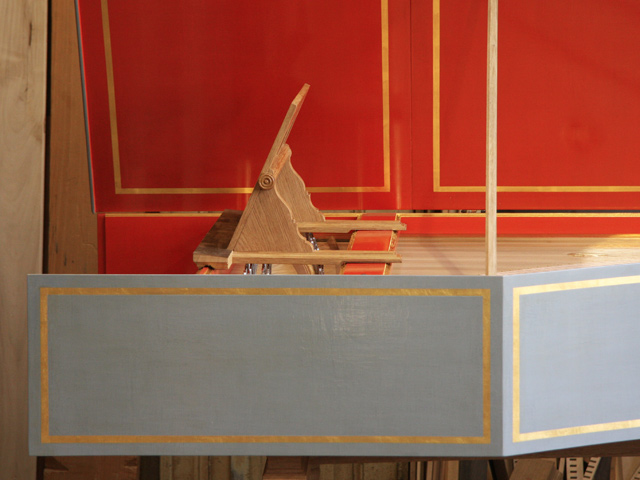
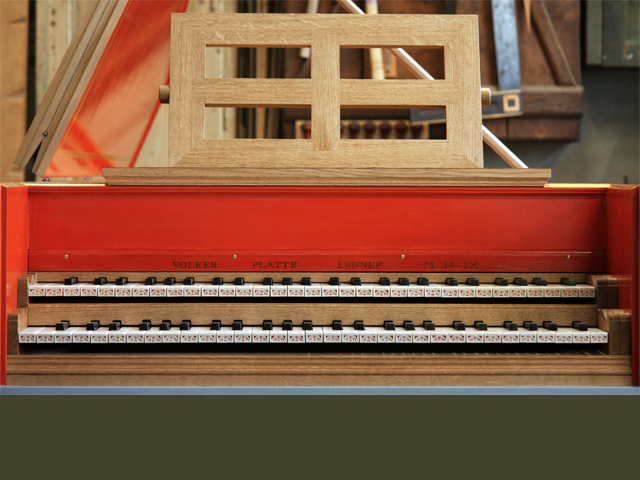
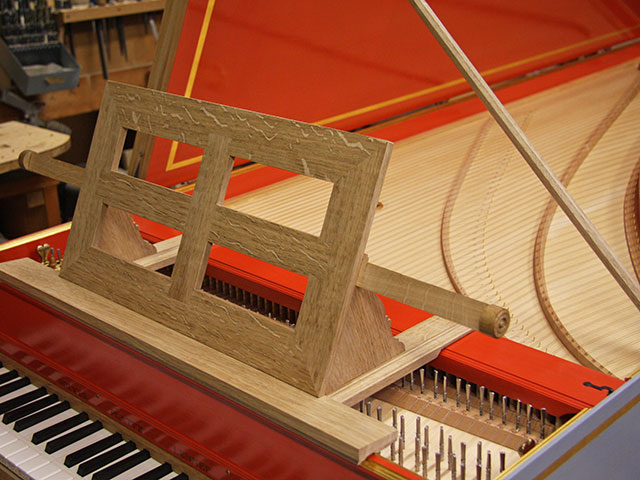
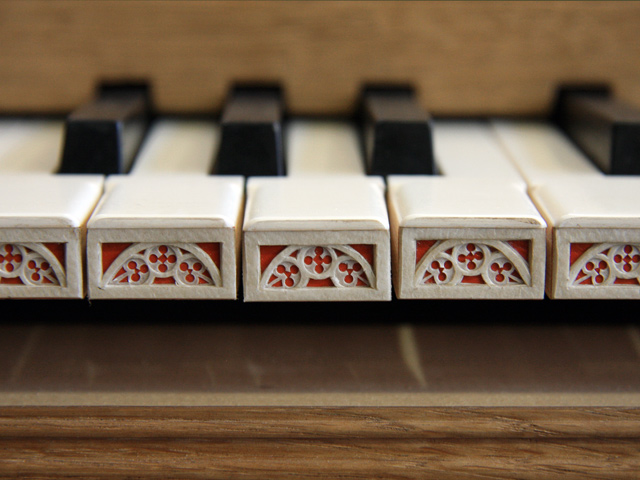
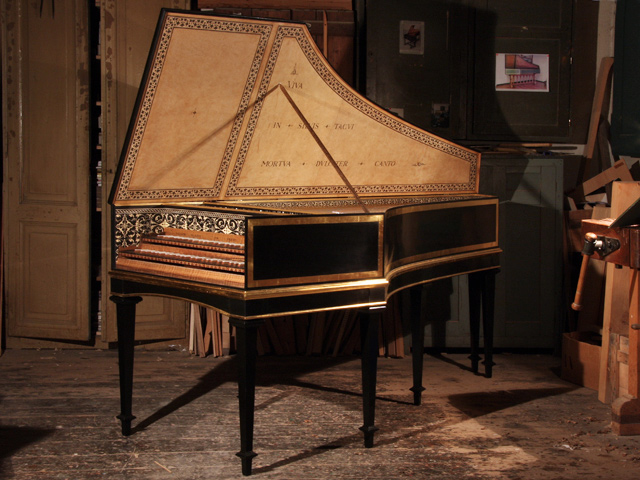
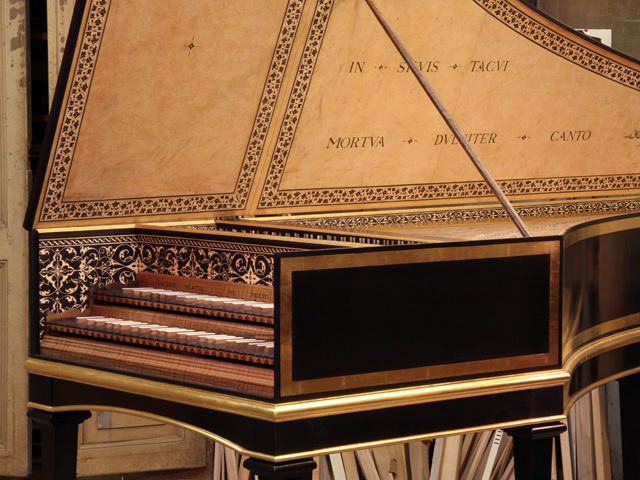
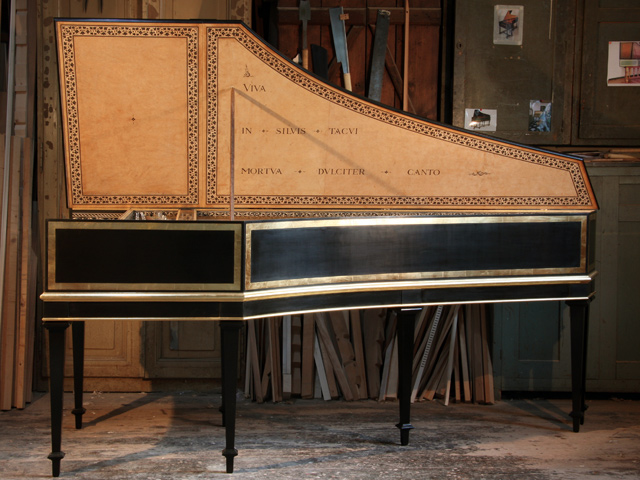
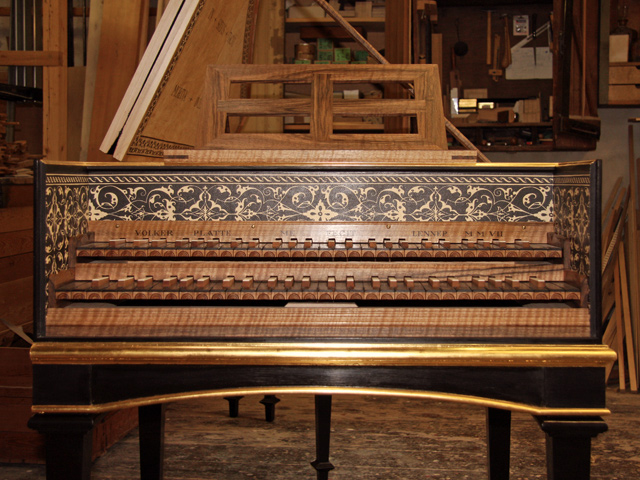
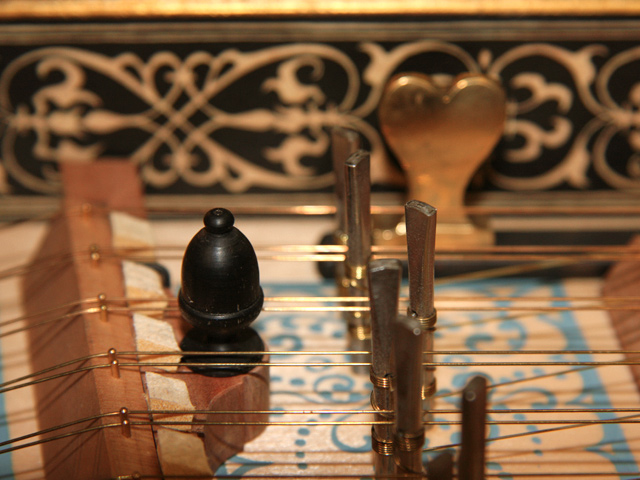
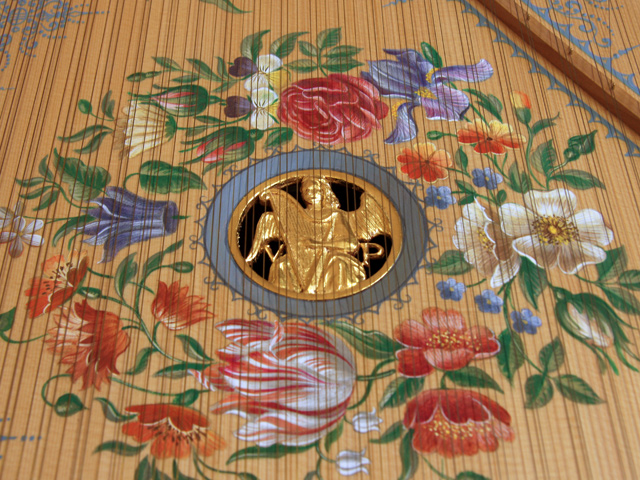
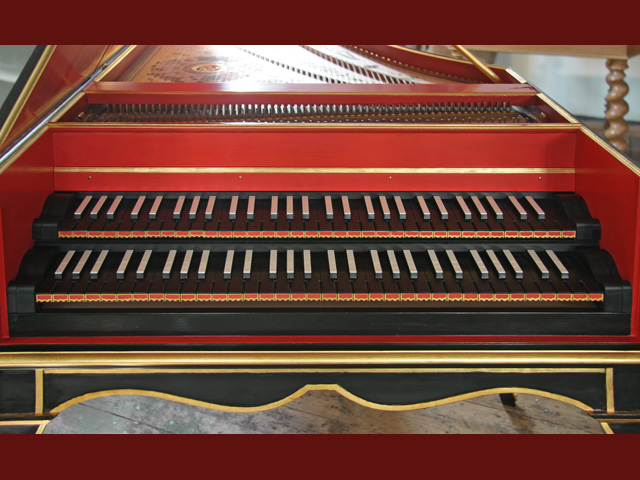
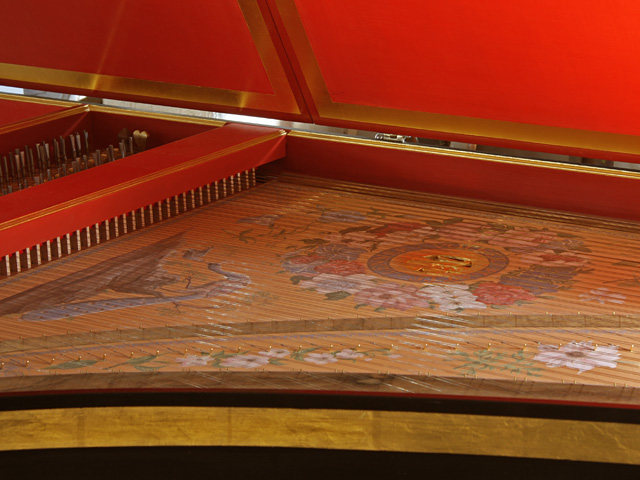
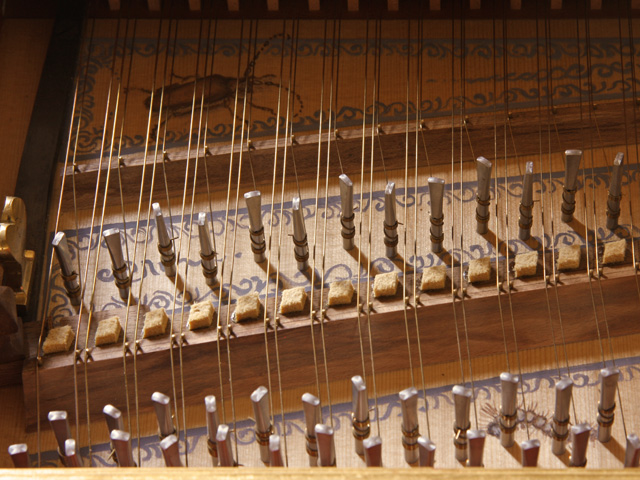
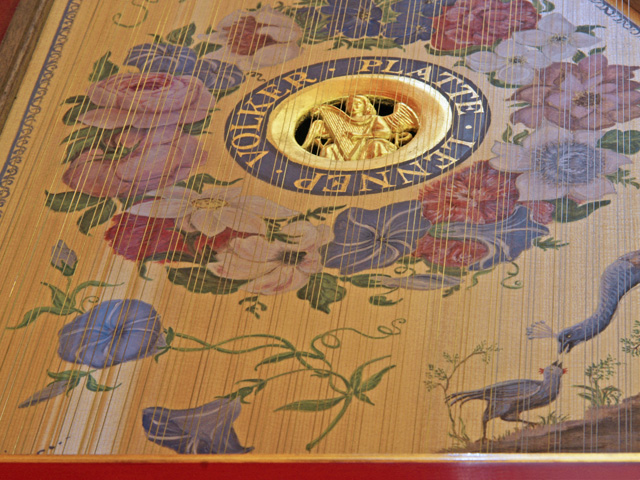
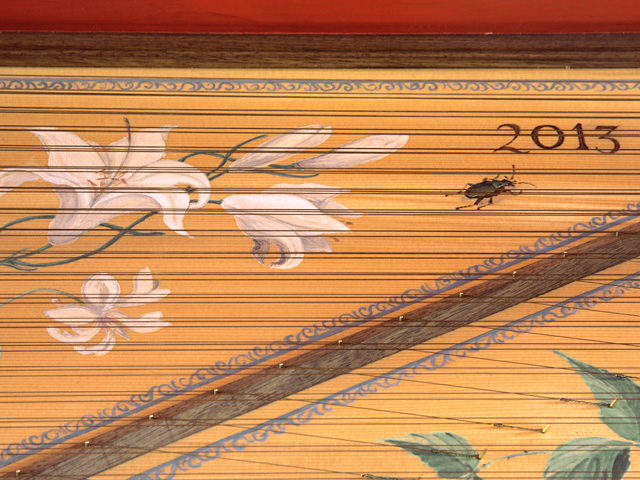
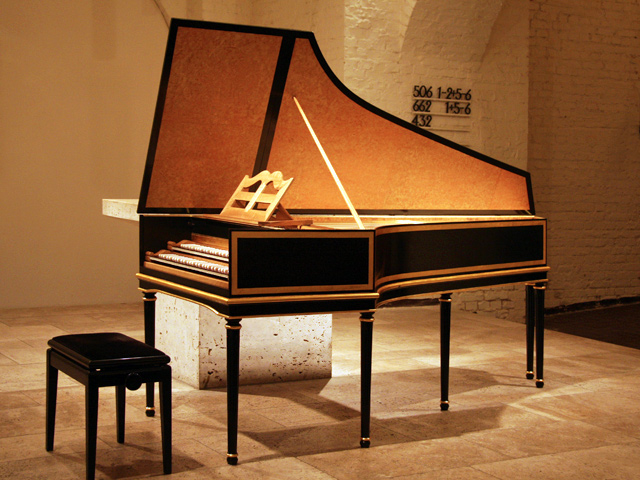
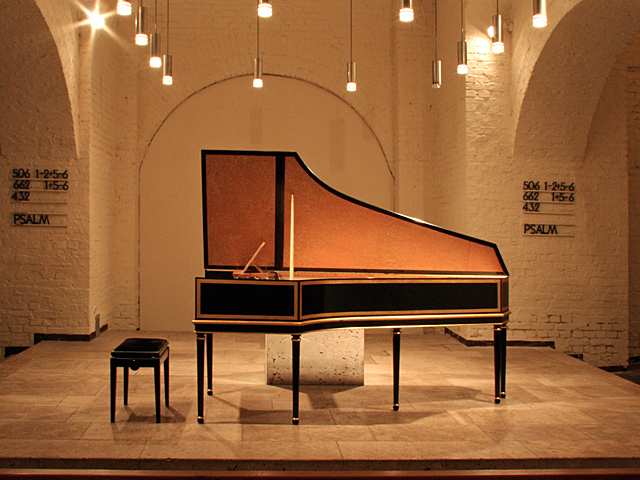
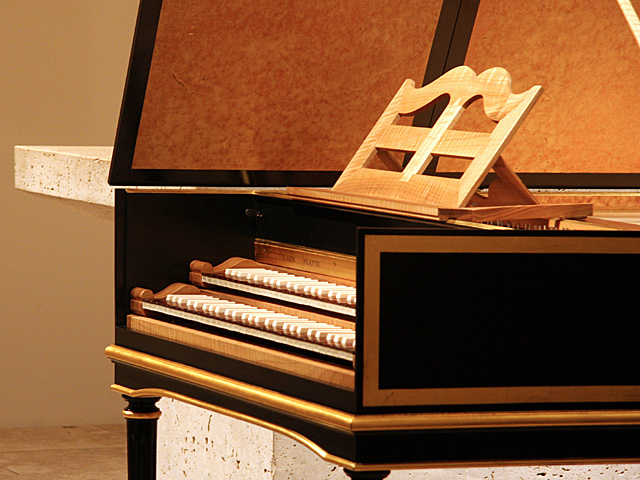
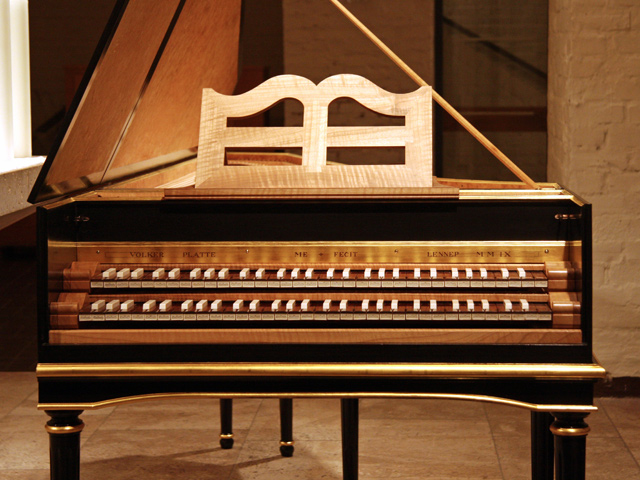
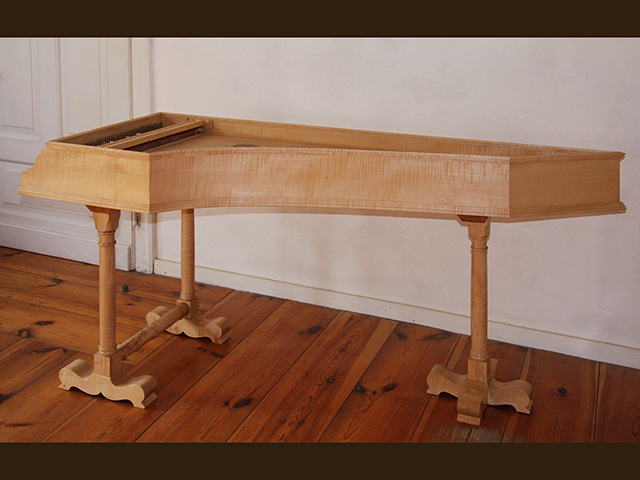
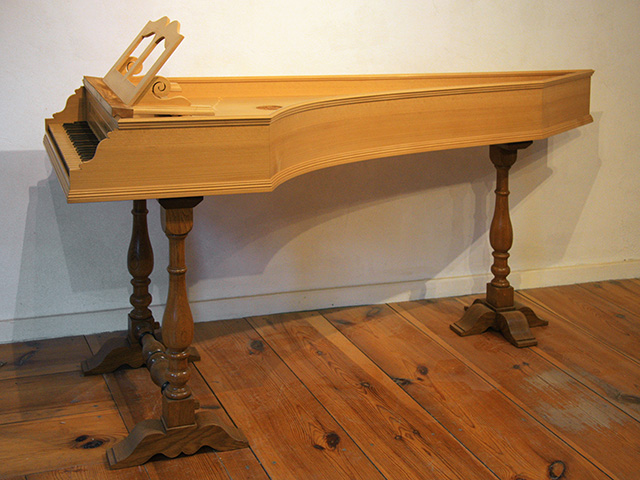
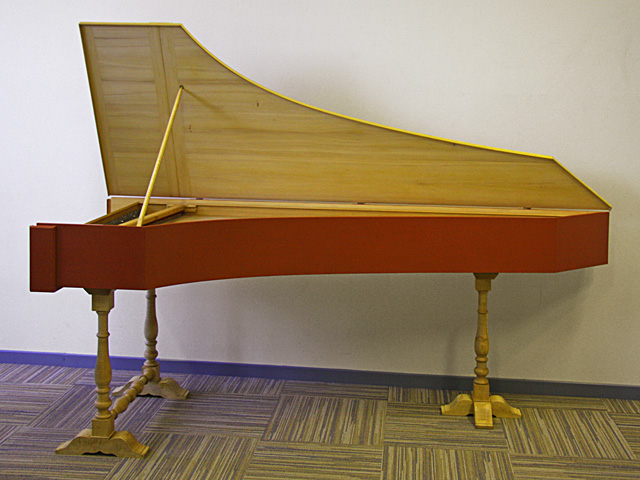
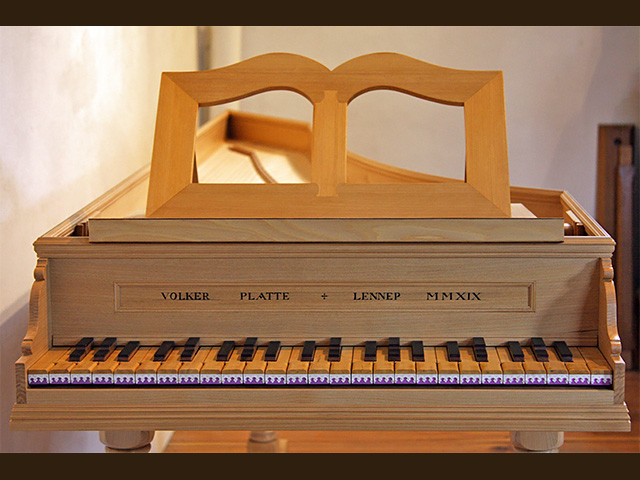
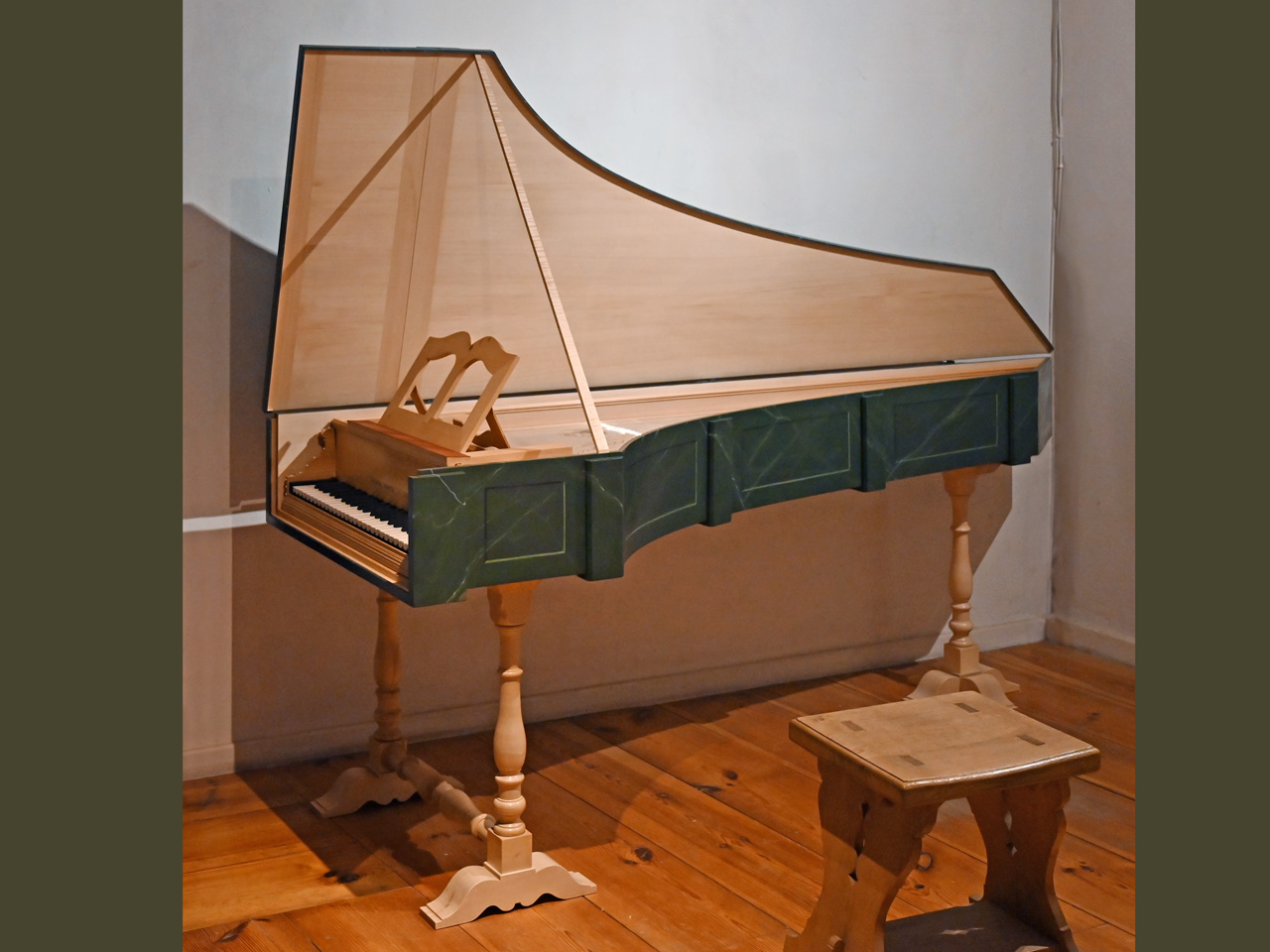
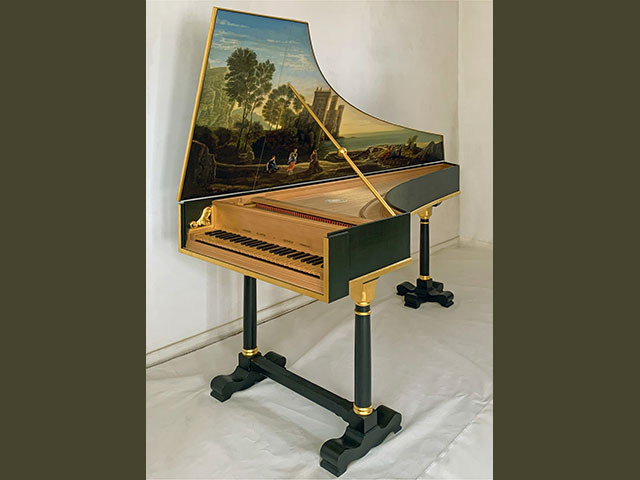
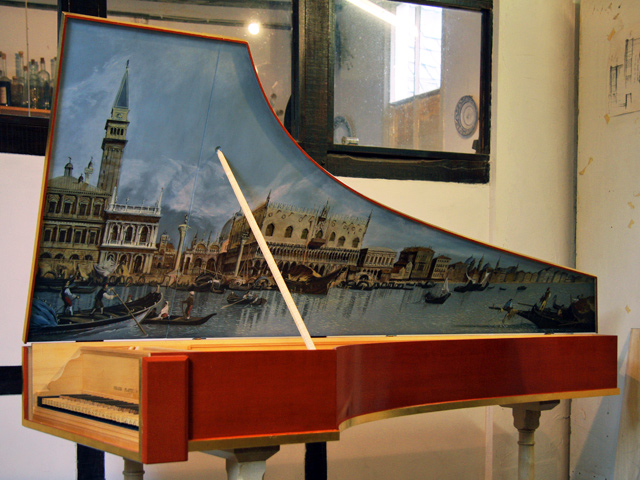
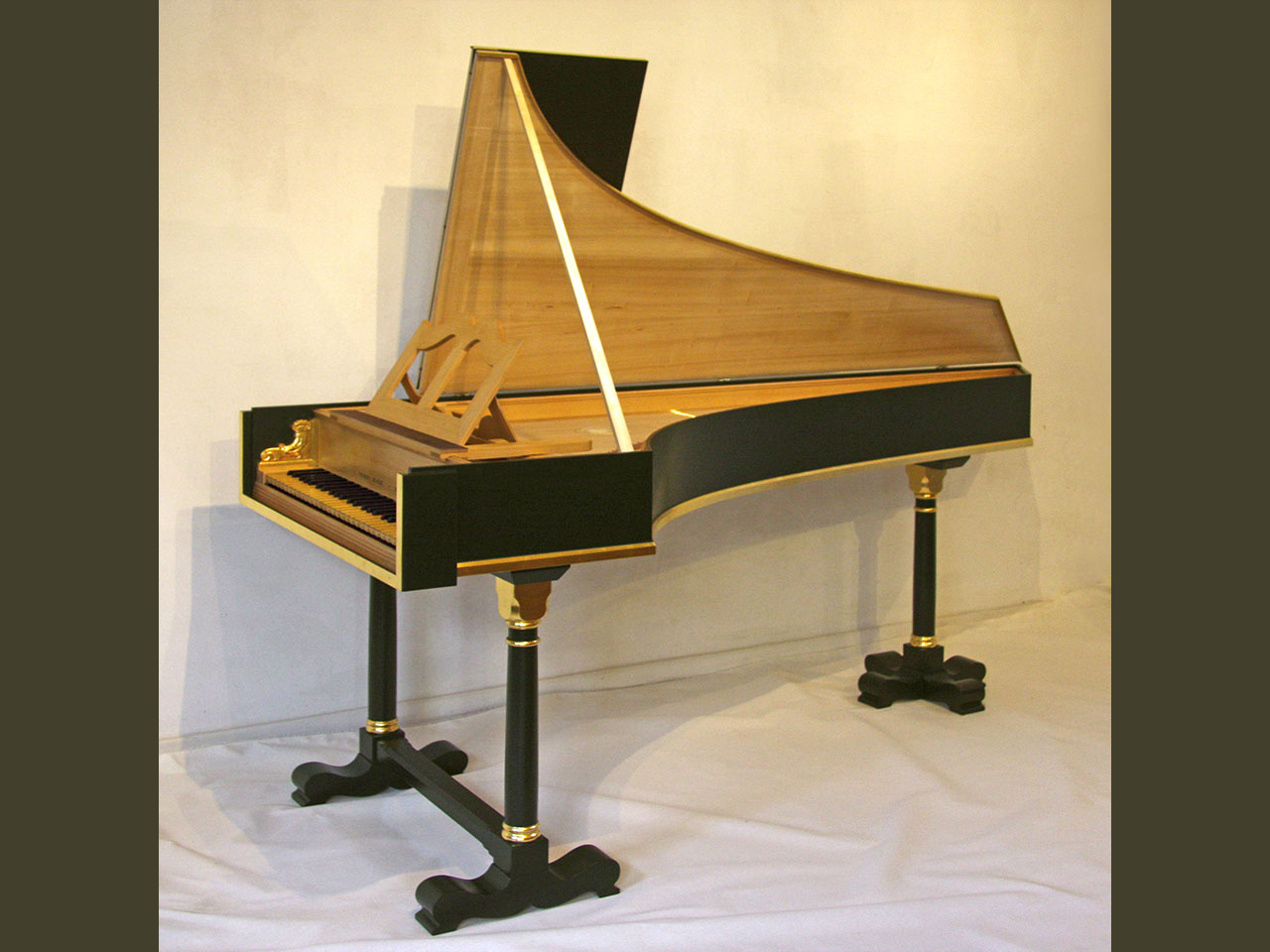
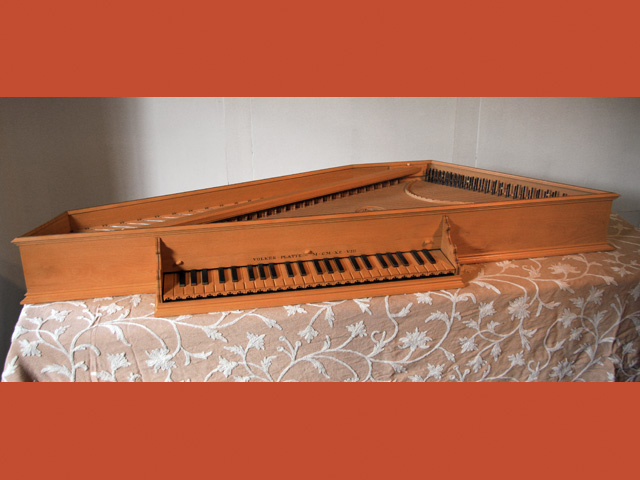
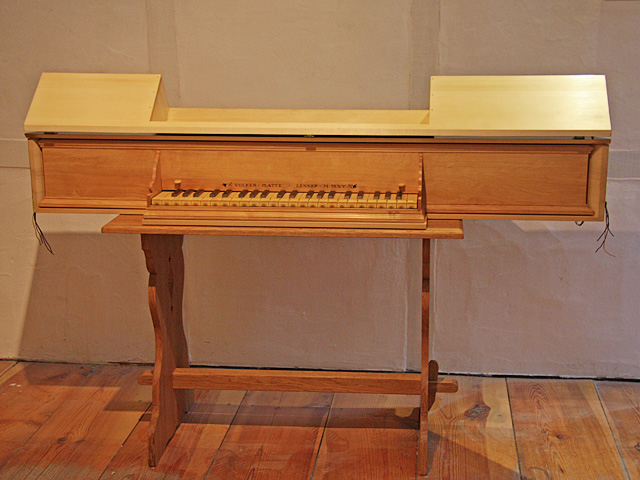
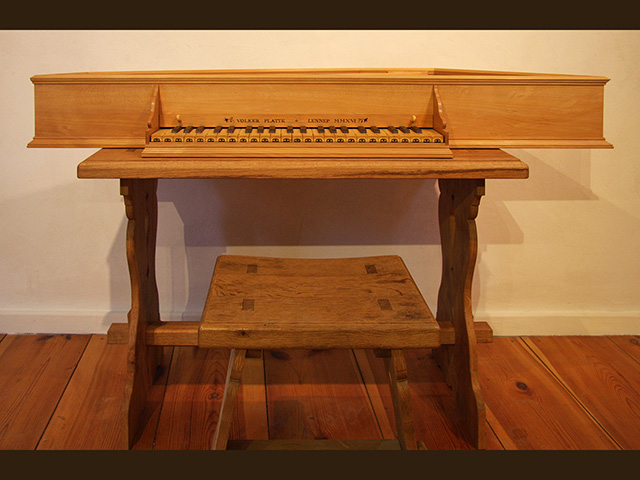
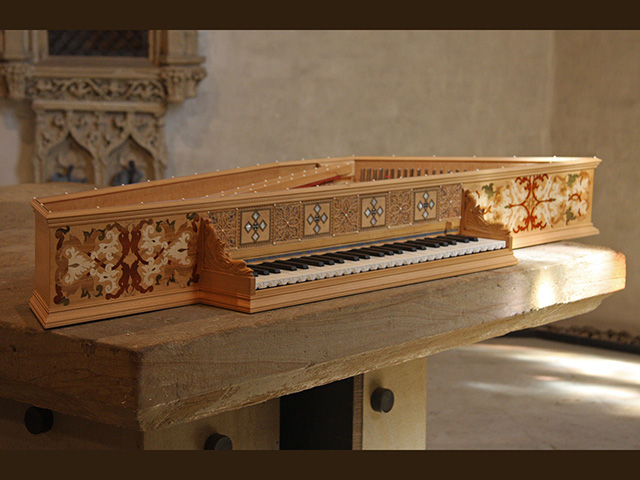
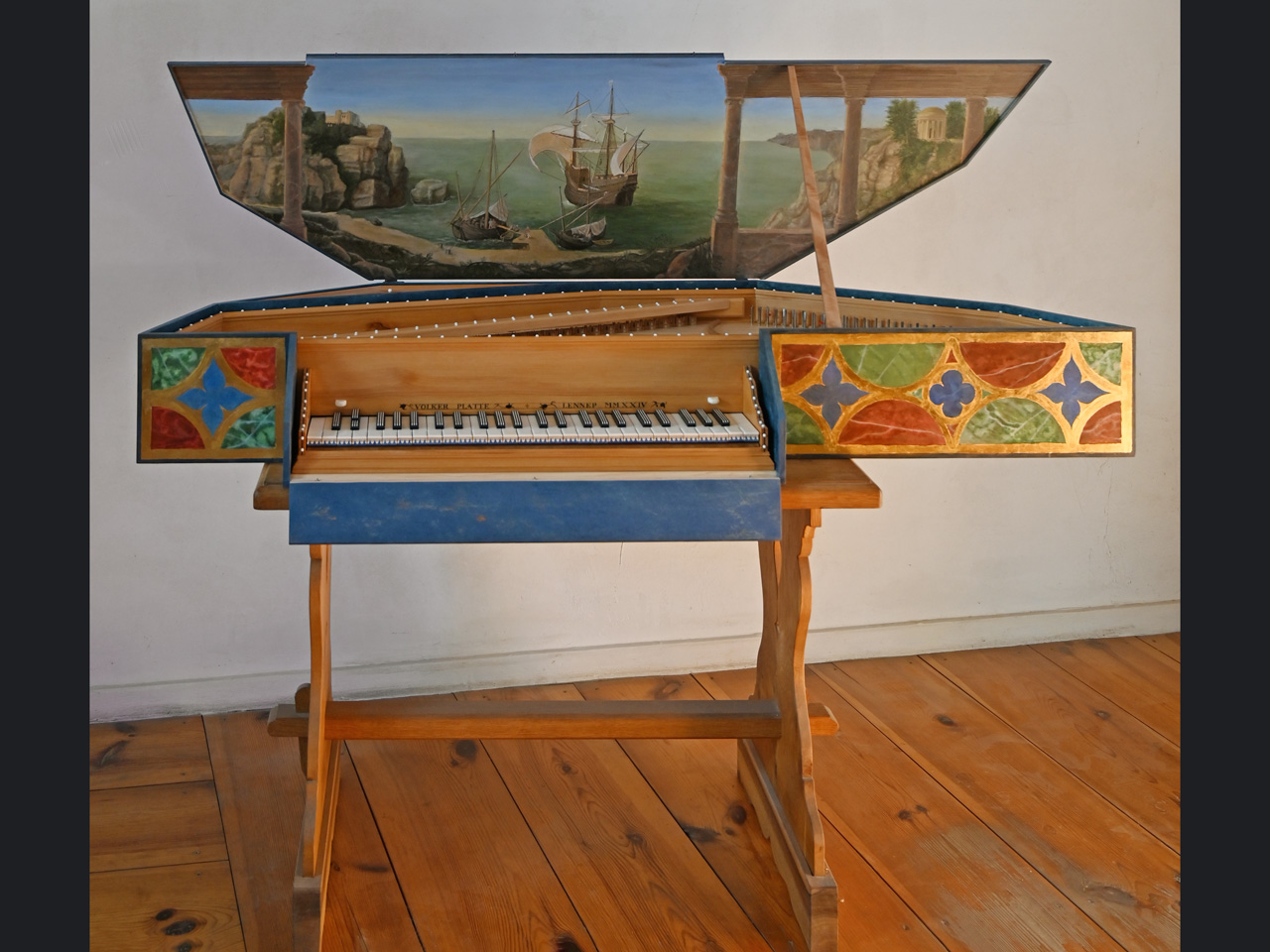
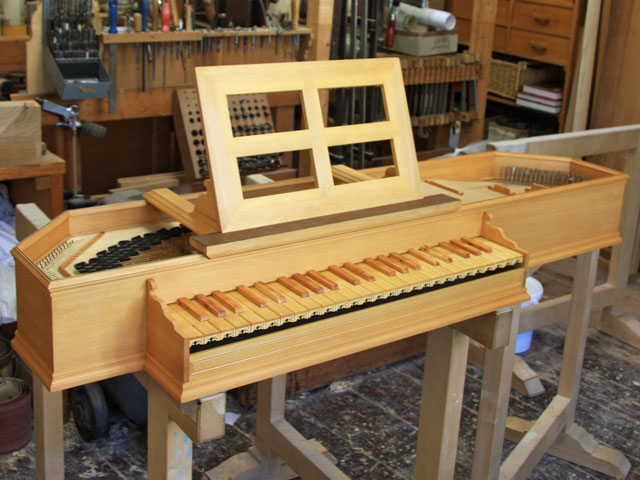
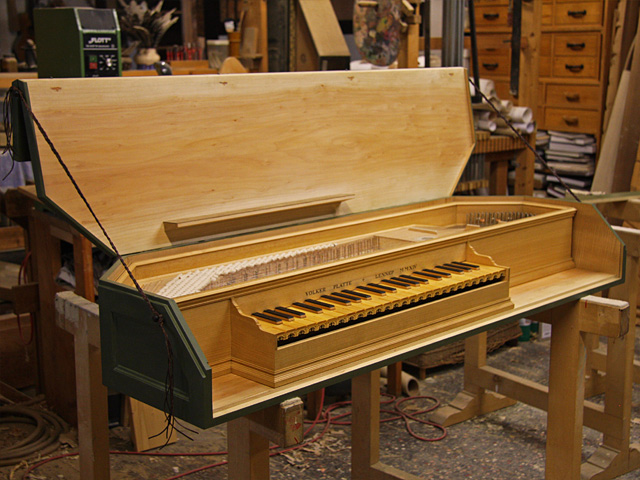
Two-manual Flemish harpsichord after Johannes Ruckers (1624), petit ravalement, compass FF, GG, AA -d”’, 8′, 4′, 8′, lute stop, with Chinoiserie lid painting by Jessica Zappe and sound board painting by Eva Thomas.
Use the buttons to navigate to the previous or next gallery in this category, or return to the overview page.
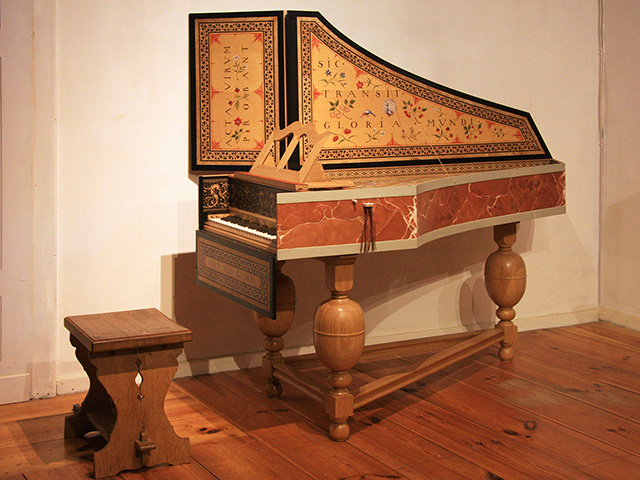
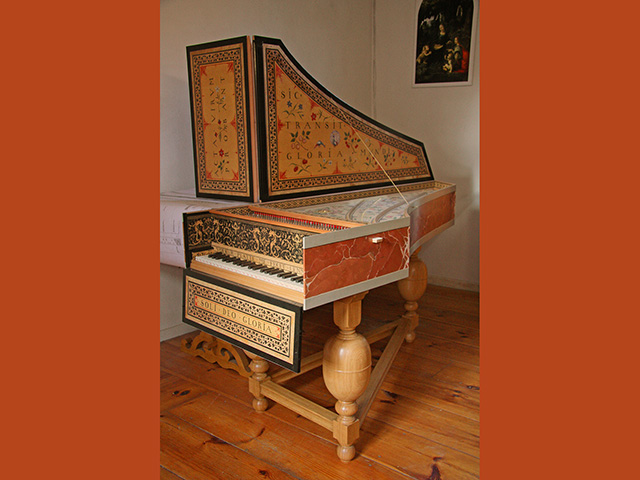
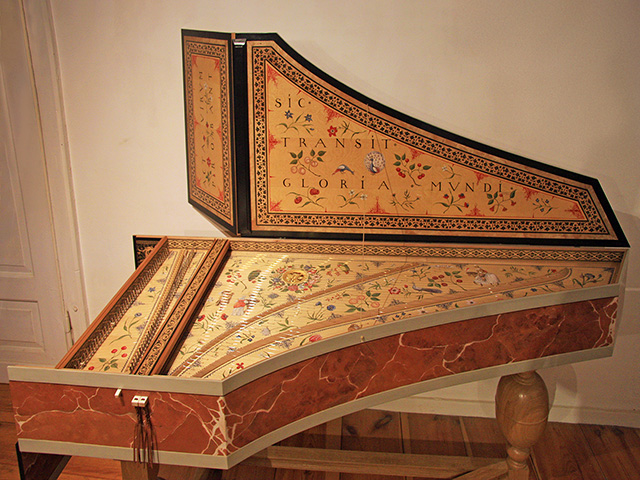
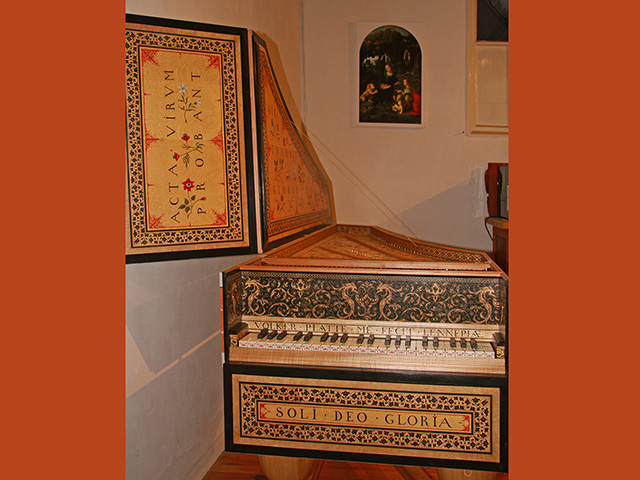
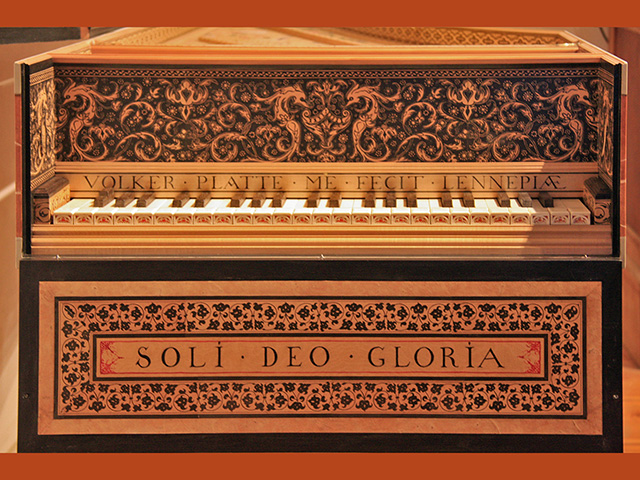
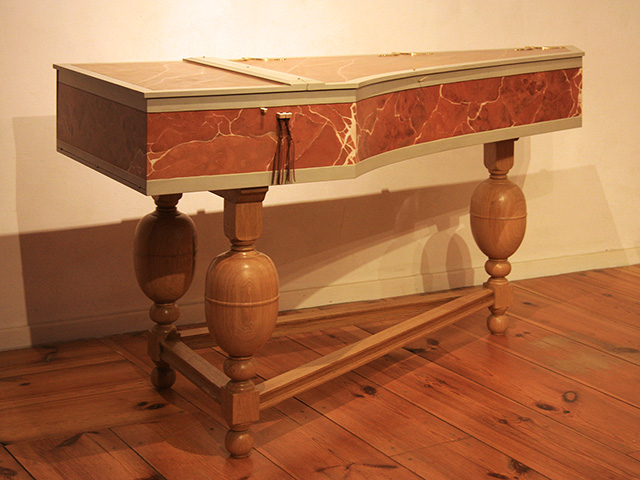
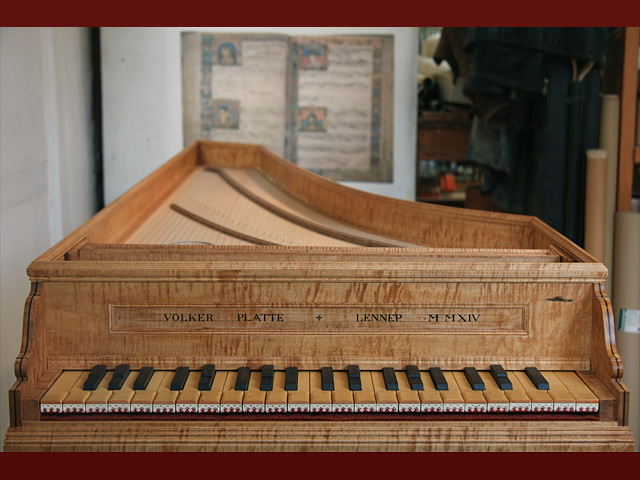
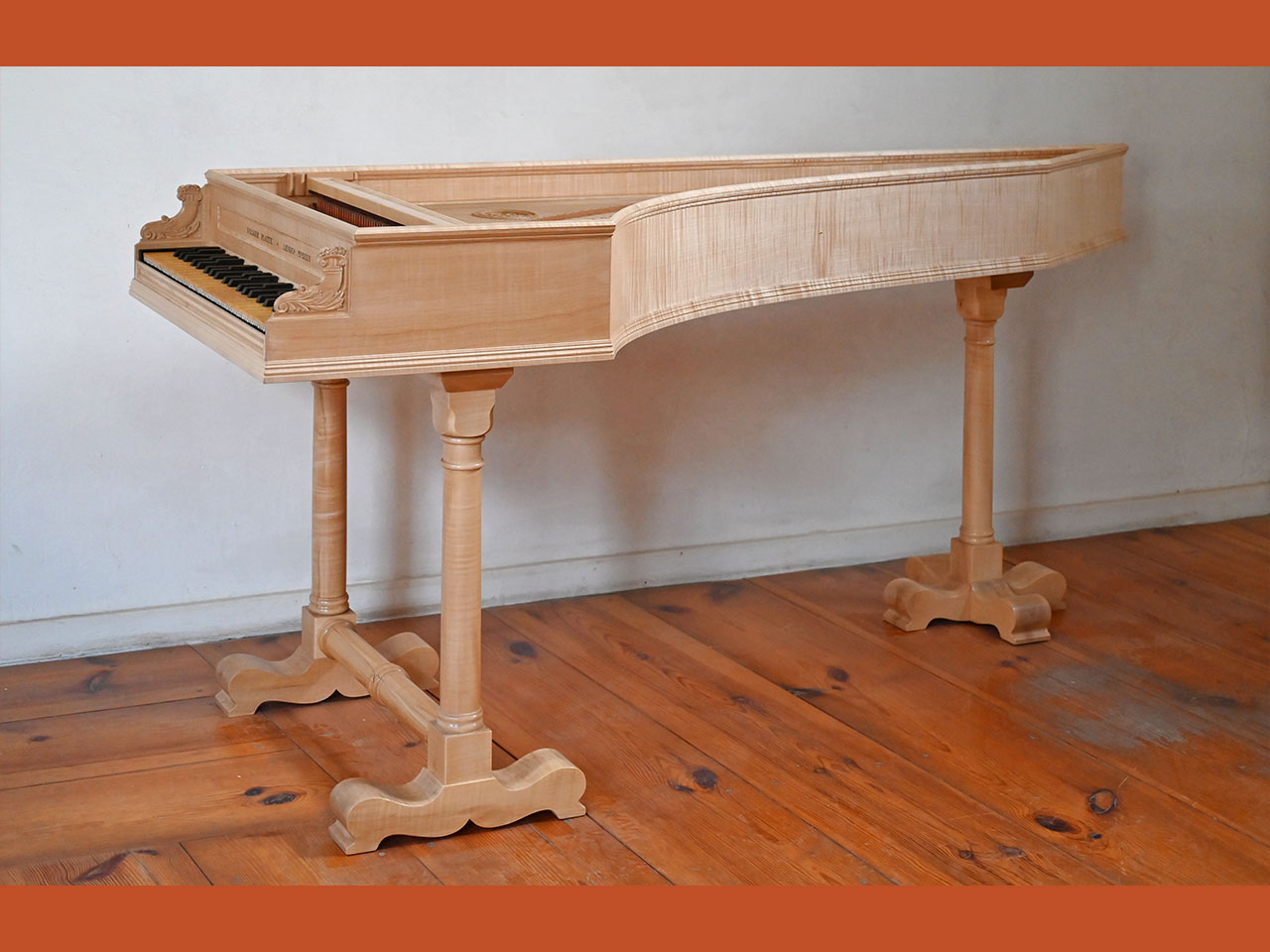
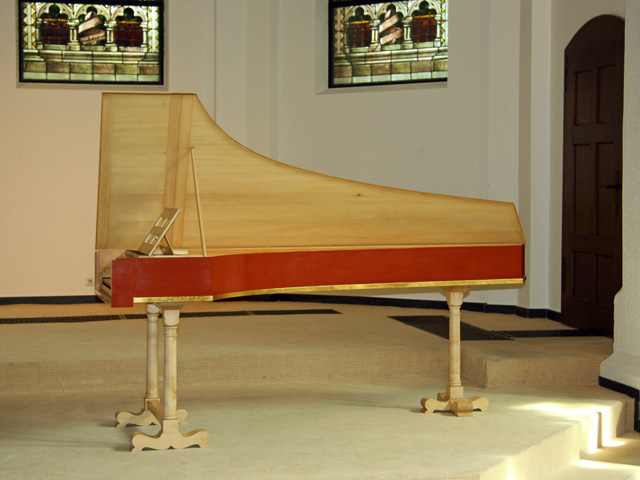
Single-manual harpsichord after Andreas Ruckers (1637), compass C/E–c”’, 8′, 4′, lute stop, pitch 415 Hz, with ”Batzen“ legs. Marbling and decoration painting by Eva Thomas.
Use the buttons to navigate to the previous or next gallery in this category, or return to the overview page.
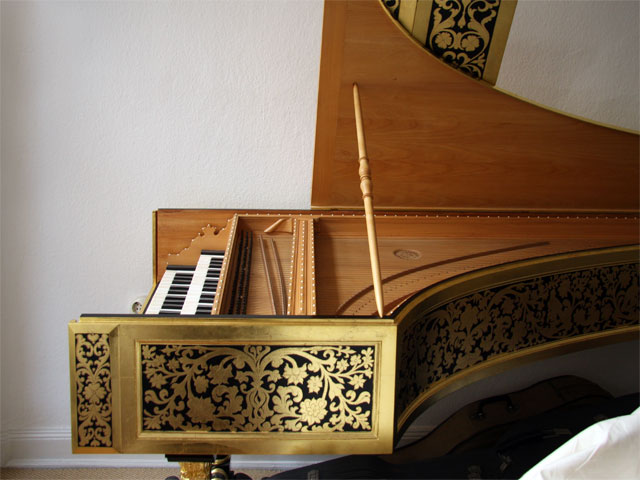
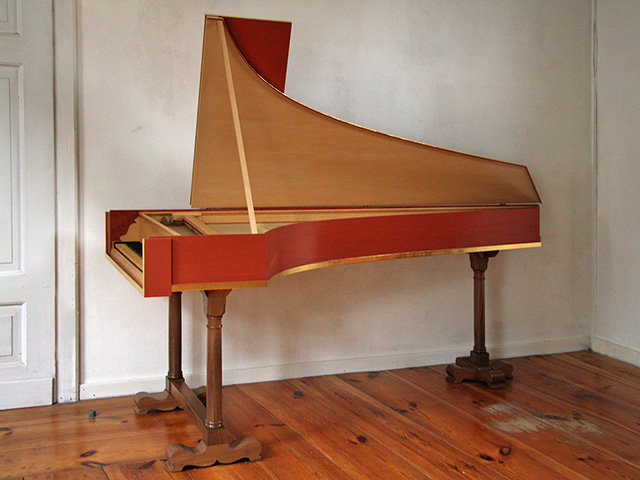
Two-manual Flemish harpsichord after Johannes Ruckers (1624), petit ravalement round 1700, 8′, 4′, 8′, lute stop, compass GG, AA–d”’, e”’, execution in French style, sound board painting by Cornelis Verboom (the Netherlands).
Use the buttons to navigate to the previous or next gallery in this category, or return to the overview page.
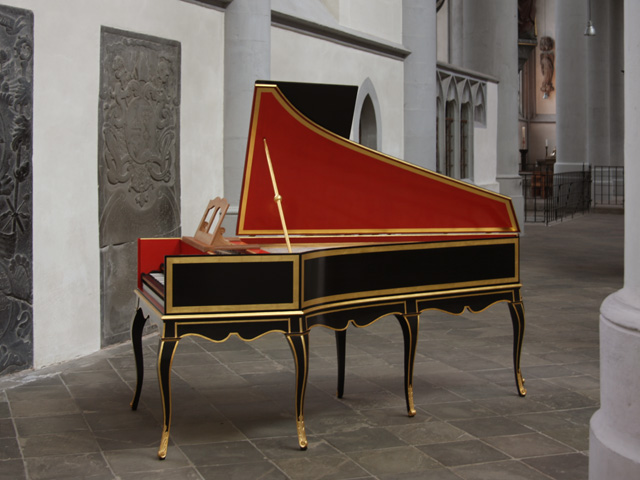
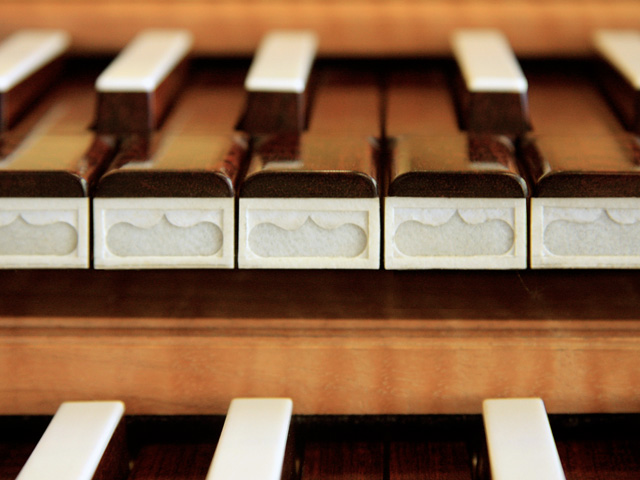
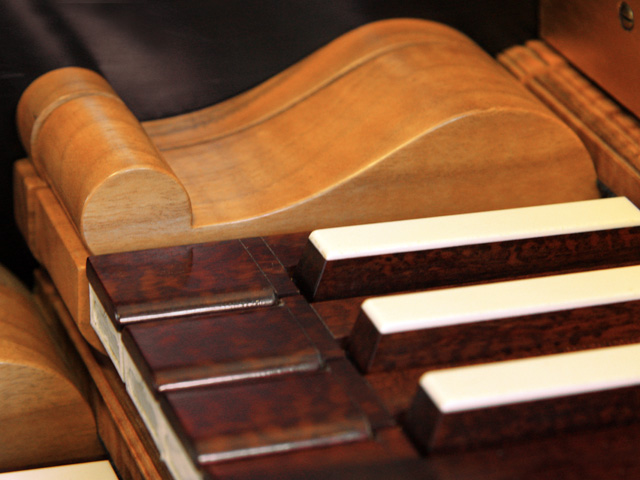
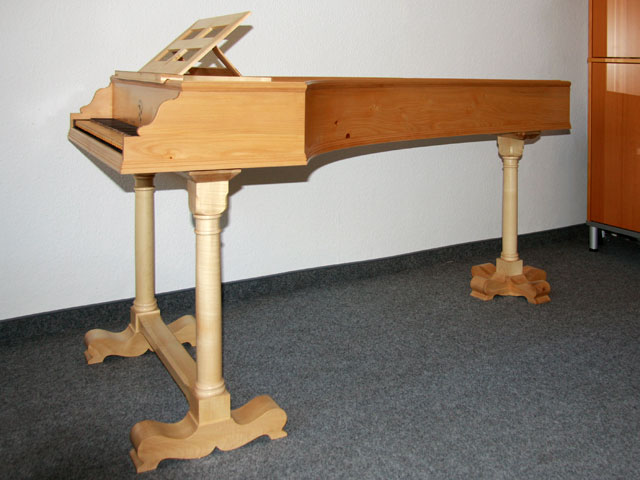
Two-manual French harpsichord after François-Etienne Blanchet (1765), compass: FF – f”’, transposing 392 Hz, 415 Hz, 440 Hz, 8′, 4′, 8′, lute stop. Case of lime wood, painted upon a chalk base, inside red, outside black with elaborate gilding, natural keys of ebony, key tops of bone on ebony. The instrument has a splendid Rococo stand with carved volutes and acanthus leaves. The sound board is decorated with an egg tempera painting of vines and flowers by Eva Thomas.
Use the buttons to navigate to the previous or next gallery in this category, or return to the overview page.
The case of the early instruments is of walnut, otherwise of lime or poplar, dark green or black, inside painted red. Keys of ebony and bone or bone upon pear respectively.
The thin-cased instruments are built with cypress. “False-inner-outer instruments” are made of poplar, coated on a chalk base and with gilded mouldings. The soundboard is made of spruce or cypress and has a parchment rose. The key tops are made of boxwood for the naturals and ebony on top of walnut sharps. For an additional charge also in ivory. The strings are normally made of brass. The instruments are supported by two turned trestles.
Please click on one of the following links to jump to the particular instrument list: